APPI Certified GFZ Paratrike Course #2 starting in November, BOOK your place NOW!

A Pilot's Guide to Types of Clouds
Meteorologists classify clouds by two things: altitude (how high they sit in the atmosphere) and shape (how they form)
WEATHER
Capt Vibhuti Singh
4/23/20265 min read
Know Your Sky: A Pilot's Guide to Types of Clouds
Published by GFZ Flying Club | Go Fly Zone, Shahpura, Jaipur
There's a moment every new pilot remembers - the first time they looked up at the sky not as a casual observer, but as someone who actually had to read it. Clouds aren't just beautiful. They're a language. And learning to speak that language is one of the most essential skills you'll develop on your journey from the ground to the sky.
At GFZ Flying Club, we train pilots across a range of aircraft - from Powered Paragliders and Powered Parachutes to Light Sport Aircraft and Motor Gliders. No matter what you're flying, the sky above you is the same. And the clouds in it are telling you something. The question is: do you know how to listen?
Let's break it all down.
The Big Picture: How Clouds Are Classified
Meteorologists classify clouds by two things: altitude (how high they sit in the atmosphere) and shape (how they form). This gives us four main families:
Family, Altitude, Range & Cloud Types
High Clouds, Above 20,000 ft - Cirrus, Cirrostratus, Cirrocumulus
Mid-Level Clouds 6,500 – 20,000 ft - Altostratus, Altocumulus
Low Clouds Below 6,500 ft - Stratus, Stratocumulus, Nimbostratus
Vertical Clouds Span multiple layers - Cumulus, Cumulonimbus
Think of the sky as a layered cake. Each layer has its own personality - and its own implications for your flight.
High Clouds (Above 20,000 ft)
High clouds form in the cold upper reaches of the troposphere, where temperatures are well below freezing. They're made almost entirely of ice crystals, which gives them that distinctive wispy, translucent look.
☁️ Cirrus
These are the fine, feathery streaks you often see painted across a blue sky - sometimes called "mare's tails." Cirrus clouds are thin, white, and wispy. On their own, they're generally harmless for aviation. But here's the pilot's insight: cirrus clouds are often the advance scouts of an approaching weather system. If you see thick cirrus spreading across the sky and thickening over several hours, a warm front may be on its way.
Pilot takeaway: Not immediately dangerous, but worth monitoring.
☁️ Cirrostratus
A milky, semi-transparent veil that spreads across the sky and often produces a halo around the sun or moon - one of nature's most recognisable weather signals. Cirrostratus forms when cirrus clouds spread and merge. It doesn't produce precipitation on its own, but it almost always precedes deteriorating weather within 12–24 hours.
Pilot takeaway: That halo is a warning sign. Check your weather forecast.
☁️ Cirrocumulus
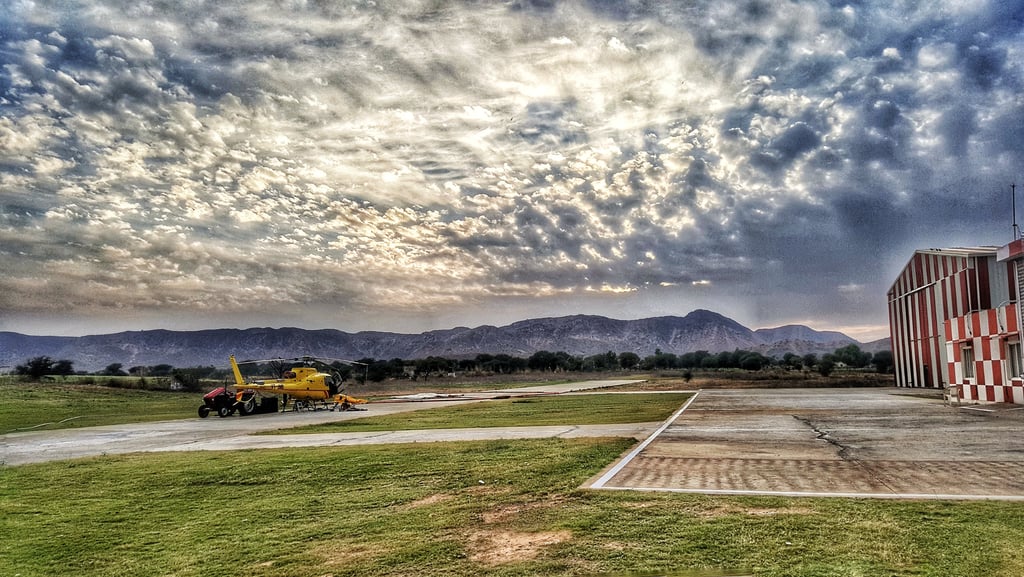
The rarest of the high clouds - small, white puffs arranged in rows or rippled patterns, like fish scales across the sky. This is what pilots and sailors call a "mackerel sky." Cirrocumulus indicates instability at high altitudes and can sometimes signal approaching turbulence.
Pilot takeaway: Rare and brief. Appreciate the view, but note it.
Mid-Level Clouds (6,500 – 20,000 ft)
Mid-level clouds sit in the middle of the troposphere. They're made of water droplets (or a mix of ice crystals at their tops) and tend to look grey or blue-grey. This is where conditions can start to feel genuinely relevant to your flight planning.
☁️ Altostratus
A grey or blue-grey sheet that covers the sky like a thick blanket. The sun may appear as if through frosted glass - but there are no halos (unlike with cirrostratus). Altostratus typically brings continuous light-to-moderate rain or snow. It often follows cirrostratus as a weather system moves in.
Pilot takeaway: This is where VFR (Visual Flight Rules) flying gets complicated. Reduced visibility and possible precipitation make this a "check your minimums" situation.
☁️ Altocumulus
Think of altocumulus as the mid-level version of cirrocumulus - patches, waves, or rolls of grey-white cloud with visible shading. They're often seen in the morning and can indicate convective activity (rising air and potential thunderstorm development) later in the day.
Pilot takeaway: Morning altocumulus on a warm day = keep an eye on afternoon conditions.
Low Clouds (Below 6,500 ft)
Low clouds are where things get most directly relevant to general aviation and light aircraft operations. They sit close to the ground, reduce visibility, and can make takeoff and landing genuinely hazardous.
☁️ Stratus
Stratus is the cloud equivalent of a grey, overcast day - a flat, featureless layer that hugs the sky like a lid. It produces drizzle or light rain rather than heavy precipitation. The big issue with stratus is low ceilings - it can drop right down to ground level (at which point it's simply called fog).
Pilot takeaway: Stratus = low visibility. Check ceiling and visibility before flight. For PPG and paramotor pilots, this can mean a complete no-fly scenario.
☁️ Stratocumulus
The most common cloud type on Earth. Lumpy, grey-white patches or rolls that cover most of the sky, with brighter areas where sunlight breaks through. Stratocumulus rarely produces significant rain, but it does create grey, dull flying conditions.
Pilot takeaway: Often flyable, but check the base height. In hilly terrain like the Aravalli range near Jaipur, low stratocumulus can mask higher ground.
☁️ Nimbostratus
This is the serious one among low clouds. A thick, dark grey layer that completely blocks the sun and brings continuous, often heavy rainfall or snowfall. Nimbostratus is the classic "rainy day" cloud. Visibility can drop dramatically, and the cloud base can be extremely low.
Pilot takeaway: This is a ground day. Full stop.
Vertical Clouds (The Big Ones)
These clouds don't belong to just one altitude - they grow vertically, sometimes from near the surface all the way to the top of the troposphere. They represent some of the most dramatic (and most dangerous) weather phenomena a pilot will encounter.
⛅ Cumulus
The classic "fluffy" cloud - white, puffy, with flat bases and cauliflower-shaped tops. Fair-weather cumulus is the sign of a sunny day with good thermal activity. And for pilots of light aircraft, paramotors, and paragliders, thermals are what give you lift.
Here's the thing pilots learn quickly: cumulus clouds mark the tops of thermals. When warm air rises from the sun-heated ground, it cools as it gains altitude, eventually condensing into a cumulus cloud. That's your thermal - and your lift.
Pilot takeaway: Cumulus = thermals = lift. Great for soaring. But watch their vertical development carefully.
⛈️ Cumulonimbus (CB)
This is the king - and the most feared cloud in aviation. Cumulonimbus (CB) are the towering giants of the sky, rising from low levels all the way up to 40,000–60,000 feet, often with a distinctive anvil-shaped top where ice crystals spread out at the tropopause.
Inside a CB, you'll find:
Severe turbulence - strong enough to structurally damage aircraft
Hail - sometimes large enough to dent metal airframes
Lightning - a serious hazard for any pilot
Powerful updrafts and downdrafts - up to 100 mph in intense cells
Wind shear - sudden changes in wind speed/direction near the cloud base
Microbursts - violent downdrafts that can slam an aircraft into the ground
Cumulonimbus are essentially their own weather systems. They are responsible for the most severe aviation weather events - including thunderstorms, tornadoes, and flash flooding.
Pilot takeaway: No exceptions. Never fly into or near a CB. Give them a wide berth - at least 10–20 nautical miles. Even experienced airline crews go around them.
What This Means for Flying
Cloud reading isn't just academic - it directly affects whether you fly, when you fly, and where you fly. Here's a quick reference:
Cloud Type & Flight Implication
Cirrus - Monitor for changing weather
Cirrostratus - Expect weather within 12–24 hrs
Cirrocumulus - Note high-altitude instability
Altostratus - Reduced visibility, possible precip
Altocumulus - Watch for afternoon convection
Stratus - Check ceiling; potential no-fly
Stratocumulus - Generally flyable; check base height
Nimbostratus - Ground day
Cumulus - Good thermals; watch development
Cumulonimbus - Never fly near one
For PPG, PPC, paramotor, and paraglider pilots especially, low-level cloud behavior is critical - you're operating close to the ground in aircraft with very limited climb rates and no enclosed cockpit. Weather awareness isn't optional; it's survival.
Learn to Read the Sky at GFZ Flying Club
Understanding clouds is part of what makes a great pilot - and it's exactly the kind of knowledge we build into our training at GFZ Flying Club, near Jaipur, Rajasthan. Whether you're starting your Powered Paragliding journey or working toward a fixed-wing or Light Sport Aircraft licence, weather theory is built into every course we offer.
We're APPI certified, based at the Go Fly Zone airfield in Shahpura, and we welcome beginners, adventure enthusiasts, and experienced pilots looking to grow their skills.